




KT3 Removals: Best Parking & Loading Tips for Moves
Posted on 06/05/2026
KT3 Removals: Best Parking & Loading Tips for Moves
Moving house in KT3 sounds simple enough on paper. Then the van arrives, the road is tighter than you remembered, a neighbour has parked awkwardly, and suddenly every minute matters. That is exactly why KT3 Removals: Best Parking & Loading Tips for Moves is not just a nice-to-have topic; it can make the difference between a calm move and a frustrating one.
Whether you are moving from a flat near New Malden station, a family home on a busier residential road, or a small office with awkward access, parking and loading choices shape the whole day. Get them right and the move feels organised. Get them wrong and you end up carrying heavy furniture further than you should, delaying the van, and risking avoidable damage. This guide breaks the process down in plain English, with practical tips you can actually use.
Along the way, we will also point you towards useful related resources, from removal services in New Malden to planning support like crafting the perfect packing plan, because to be fair, parking is only one part of the story. The best moves are the ones where everything works together.
Why KT3 Removals: Best Parking & Loading Tips for Moves Matters
Parking and loading are not background details. They are the operational core of a successful move. In KT3, where roads can vary from open suburban streets to tighter stretches with limited kerb space, even a well-packed van can be let down by poor positioning. You may only notice the issue on moving day, usually when the clock has already started ticking. Not ideal.
The practical reason is simple: the shorter the carrying distance between the property and the van, the safer and faster the move usually is. Less time walking heavy items down steps or across pavements means less fatigue, lower strain, and fewer bumps into doorframes, railings, or other parked cars. It also reduces the chance of causing disruption to neighbours or blocking access for emergency vehicles, deliveries, or residents.
There is also a financial angle. A smoother loading setup can reduce the number of trips, the amount of labour needed, and the likelihood of last-minute complications. If you are comparing options on pricing and quotes, the move plan itself can affect value far more than people realise.
And then there is stress. Let's face it, moving day can be noisy, dusty, and emotionally full-on. A sensible parking plan gives the whole operation a bit of breathing room. You can focus on the move instead of endlessly shuffling the van two feet forward, then back, then forward again. A small win, but it matters.
How KT3 Removals: Best Parking & Loading Tips for Moves Works
The process starts before the van arrives. Good movers think about access, traffic patterns, the width of the road, nearby bends, and where the safest loading point is likely to be. If you are using a man with a van in New Malden or a larger removal team, the principle is the same: position the vehicle so the move route is short, clear, and predictable.
In practical terms, that means identifying the best place for the van to stop, then deciding how furniture and boxes will travel from the property to the loading bay. A good loading route is direct, level where possible, and free from avoidable bottlenecks. For flats, that may mean checking stair width, lift access, and entry codes. For houses, it may mean protecting driveways, keeping gates open, or moving one or two parked cars first.
The loading itself should follow a controlled order: heavier items first, fragile items protected and placed last, and frequently needed items set aside for easy access. If you are moving awkward pieces such as beds, mattresses, or bulky sofas, it helps to read specific guidance like moving a bed and mattress safely and smart sofa handling and storage tips. Those items often trip people up because they look straightforward. They rarely are.
When done well, parking and loading become a rhythm: park, protect, carry, load, secure, repeat. No drama. No panic. Just a clear flow.
Key Benefits and Practical Advantages
Good parking and loading planning offers a surprisingly long list of benefits. Some are obvious. Some only become obvious when they go wrong.
- Less lifting distance: shorter carries mean less strain on backs, wrists, and shoulders.
- Faster turnaround: the crew can work more efficiently when access is direct.
- Lower damage risk: fewer tight corners and less weaving through obstacles.
- Better neighbour relations: less blocking, less noise, fewer awkward moments.
- Improved safety: clearer walkways reduce trip hazards and collisions.
- More accurate scheduling: the move is less likely to run over because of access problems.
There is a practical comfort in all this too. People often focus only on packing the boxes and forget that the day is still a physical job. A decent loading plan supports the whole move, especially if you have stairs, large furniture, or items that need extra care. If you are decluttering first, a useful companion read is key steps to declutter before relocating. Less stuff usually means less loading stress. Obvious, yes. But easy to ignore until the last minute.
And here is a small truth from real move-day experience: a van parked well can feel like half the job is already done. People relax when they can see a clear system.
Who This Is For and When It Makes Sense
This guidance is useful for almost anyone moving in or around KT3, but it becomes especially valuable in a few common situations.
- House movers: especially if you have multiple bedrooms, garden access, or larger furniture.
- Flat movers: where lifts, stairs, and narrow access points can slow things down.
- Students: when time is tight and the move involves a limited parking window.
- Office movers: where access needs to stay orderly and business disruption should be kept low.
- Same-day moves: when you cannot afford trial-and-error parking decisions.
If you are planning a small local move, a man and van service in New Malden may be enough. For larger homes or trickier access, a broader house removals service in New Malden might be the better fit. Truth be told, the right choice depends less on the size of the postcode and more on the details of the property.
You should also think about this topic if you are moving anything delicate or awkward. A piano, for example, needs special care and a very calm loading process. If that sounds like your day, the guide on understanding piano moving is worth a read.
Step-by-Step Guidance
Below is a practical move-day sequence you can adapt to your own property. It is simple, but that is kind of the point.
- Check access before the van arrives. Walk from the front door to the kerb and look for bins, planters, low branches, icy patches, or uneven paving.
- Decide where the van should stop. Aim for the shortest safe route from the property to the loading point. Avoid squeezing in where drivers and pedestrians cannot see clearly.
- Reserve or clear space if needed. If there is a family car, visitor vehicle, or obstacle in the way, move it early. Doing this at the last minute can unravel everything.
- Protect the route. Use floor coverings, door protection, and blankets where appropriate, especially if rain has left the hallway damp or slippy.
- Load heavy and awkward items first. Sofas, wardrobes, appliances, and beds should usually be loaded before smaller boxes. If you need lifting technique support, see practical heavy lifting techniques and kinetic lifting methods.
- Keep an eye on balance. Load items so the van is stable, with heavier goods secured low and evenly distributed.
- Keep essentials accessible. Put kettle items, documents, chargers, medication, and simple cleaning supplies somewhere you can reach them easily.
- Do a final sweep. Check cupboards, lofts, under beds, behind doors, and the bottom of wardrobes. People forget things there all the time. Honestly, more than they think.
If you are planning the packing side at the same time, a strong packing plan will make the loading stage much smoother. The two go together.
Expert Tips for Better Results
These are the small details that often separate a decent move from a genuinely smooth one.
1) Think like a driver, not just a homeowner
Stand back and look at the property from the road. Is there enough turning room? Can the van pull away safely? Is there a blind corner where another vehicle could appear suddenly? If the answer is no, adjust early rather than hoping for the best. Hope is not a parking strategy.
2) Use the quietest window you can
Early morning can work well for some moves, though not every street is the same. A calmer window sometimes means less traffic and fewer pedestrians. That said, check local conditions and any building rules first. In a busy area, a half-hour of reduced congestion can make a world of difference.
3) Keep one person focused on the route
It helps if one person watches the doorway, kerb, and loading path at all times. Their job is not to lift; it is to keep everyone moving safely and to call out small hazards. A slipped mat or half-open gate can ruin a very good rhythm.
4) Separate fragile and bulky items early
Fragile pieces should not be mixed in with the last big push of heavy furniture. If you have glass, mirrors, or carefully packed boxes, set them aside in a known order. That small bit of organisation saves a lot of stress later.
5) Use a pre-move declutter plan
The fewer unnecessary items you move, the less loading pressure you create. If you are not sure where to begin, the guide on decluttering before relocation is a practical starting point.
One more thing: do not underestimate weather. A damp path, a bit of drizzle, and a shiny doorstep can turn a quick carry into a careful shuffle. It sounds minor. It is not.
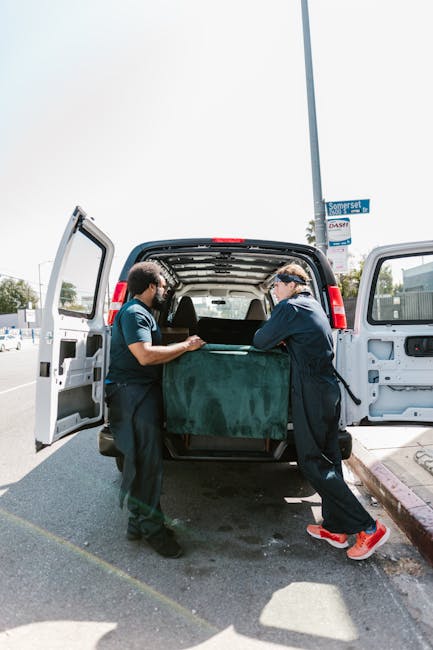
Common Mistakes to Avoid
Most move-day problems are predictable. That is the good news. You can avoid plenty of them with a little forethought.
- Waiting until the van arrives to think about parking. By then, you have already lost time.
- Blocking the pavement or a neighbour's drive without checking first. It may be convenient for you, but it can create problems fast.
- Leaving heavy items until the end. That is when energy is lowest and mistakes are most likely.
- Overfilling boxes. This is one of the fastest ways to make loading awkward and unsafe.
- Ignoring access details for flats. Lift sizes, stair turns, and entry systems all matter.
- Forgetting about appliance preparation. Fridges and freezers, for example, need specific handling before moving.
If an appliance is part of your move, these guides help with the finer details: storing your freezer safely and preparing a freezer that is not in use. Small thing, big difference.
A slightly awkward but common mistake? Assuming the move will somehow organise itself. It never does. Not once.
Tools, Resources and Recommendations
You do not need a warehouse full of equipment to handle parking and loading properly, but a few practical tools make life easier.
- Furniture blankets: useful for protecting walls, bannisters, and the van interior.
- Straps and ties: help secure items inside the vehicle so they do not shift in transit.
- Trolleys or dollies: helpful for heavier boxes and appliances where access allows.
- Door protectors: reduce the risk of scuffs on frames and hinges.
- Labels and markers: keep loading order clearer, especially if you are mixing rooms.
- Gloves with grip: a small comfort on a wet or cold day.
For people comparing service options, the wider removal services overview can help you understand what kind of support is available. If you want to know more about the team behind the service, the about us page is a sensible place to start.
And if you are still figuring out the physical side of the move, it can be helpful to read about the practical use of furniture removals in New Malden or the more compact flat removals option. Different move types need different loading patterns. Simple as that.
Law, Compliance, Standards, or Best Practice
Parking and loading during a move is not just a convenience issue. There are sensible legal and practical boundaries to respect. Local roads, yellow lines, access restrictions, and resident parking rules can all affect where a van may stop. If you are unsure, check the local situation in advance rather than assuming a quick stop will be acceptable.
Best practice also means keeping pavements and shared areas as clear as possible. That matters for pedestrians, neighbours, and anyone with mobility needs. If a building has specific access rules, follow them. If a parking bay needs to be booked or a notice given, do that early. It sounds obvious, but moving day has a way of making obvious things vanish.
On the safety side, proper manual handling remains important. Heavy lifting should be planned carefully, and it is sensible to use the right equipment or professional help where needed. If the job feels awkward, do not force it. There is no prize for wrestling a wardrobe down a hallway by yourself. For a broader view of safety and service expectations, the health and safety policy and insurance and safety information are useful supporting reads.
Responsible removal work also includes being considerate with waste and packaging. If you are reducing waste during the move, see the site's guidance on recycling and sustainability. Small decisions here can add up nicely.
Options, Methods, or Comparison Table
Different properties need different loading approaches. Here is a straightforward comparison to help you think it through.
| Approach | Best for | Strengths | Potential drawbacks |
|---|---|---|---|
| Kerbside loading | Houses with easy street access | Short carry distance, efficient loading, simpler flow | May be limited by traffic, parking space, or road layout |
| Driveway loading | Homes with private space | Usually safest and most convenient, less public disruption | Can be limited by narrow drives or surface protection needs |
| Front-door lift-and-carry | Short moves and smaller loads | Simple setup, quick for boxes and light furniture | Can become tiring if the route is long or stairs are involved |
| Flat access loading | Flats, maisonettes, shared buildings | Works well when lift or stair access is planned properly | More risk of congestion, timing delays, or awkward turns |
| Professional full-service support | Large, complex, or time-sensitive moves | Better coordination, less physical pressure on you | Usually more expensive than handling everything alone |
If you are deciding between a smaller move and a more comprehensive service, the page on removal companies in New Malden can help you compare service expectations more clearly. And if timing is tight, same-day removals may be relevant, though they need even more careful parking planning.
Case Study or Real-World Example
Picture a typical KT3 flat move on a damp weekday morning. The property is on a residential road with limited turning space. The mover arrives just after 8am, but the first plan is not to start lifting immediately. Instead, one person checks the route from the building entrance to the van, clears a couple of obstacles, and identifies a loading point that avoids blocking the neighbour's drive. Nothing fancy. Just sensible.
The first items out are the heavier, awkward pieces: a bed frame, a mattress, a chest of drawers, and a small appliance. A sofa goes out later once the route is confirmed clear. Boxes are grouped by room, with essentials kept separate. Because the van is positioned properly, no item has to be carried further than necessary. The result? Less strain, fewer pauses, and a move that feels controlled rather than frantic.
There is usually a moment like this where everyone takes a breath. You can hear the tape tearing, the low hum of the street, maybe a kettle from the next house. The day does not feel easy exactly, but it feels manageable. That is often the real goal.
If a property also contains large specialist items, such as a piano or unusually heavy furniture, it is worth using dedicated guidance like piano removals and the related article on piano moving complexities. Special items deserve special planning. No shortcuts there.
Practical Checklist
Use this checklist in the final 24 hours before your move. You can print it, screenshot it, or just keep it on your phone.
- Check where the van can safely park.
- Confirm access at the property, including gates, keys, lift codes, and entry details.
- Move any personal vehicles that would block the loading point.
- Protect floors, doors, and corners if needed.
- Pack and label boxes clearly by room.
- Separate fragile items and keep them easy to identify.
- Prepare beds, mattresses, sofas, and appliances for moving.
- Keep essentials in one clearly marked bag or box.
- Check for items in cupboards, lofts, sheds, under beds, and behind furniture.
- Have water, snacks, and basic cleaning materials ready.
- Confirm contact details and arrival timing with the mover.
- Review any parking or access restrictions one last time.
If you are still in the early planning stage, this house-moving guide is useful for keeping the wider process calm and organised. And if boxes are still on your to-do list, the packing and boxes page may be worth a look too.
Conclusion
Good parking and loading decisions are one of the simplest ways to improve a move in KT3. They save time, reduce lifting, protect belongings, and make the whole day feel less chaotic. You do not need perfection. You just need a clear plan, a sensible vehicle position, and a bit of awareness about the property and street outside.
If you take one thing from this guide, let it be this: the move starts before the first box reaches the van. A few minutes spent planning the loading route can save hours of hassle later. That is not an exaggeration, just the reality of moving well.
Get a free quote today and see how much you can save.
And if you are still weighing up your options, have a look at contact options for New Malden removals. A quick conversation now can make the day itself feel much lighter. Honestly, that little bit of reassurance is often worth more than people expect.